The Benefits of AI in eCommerce: Smarter, Faster, More Profitable
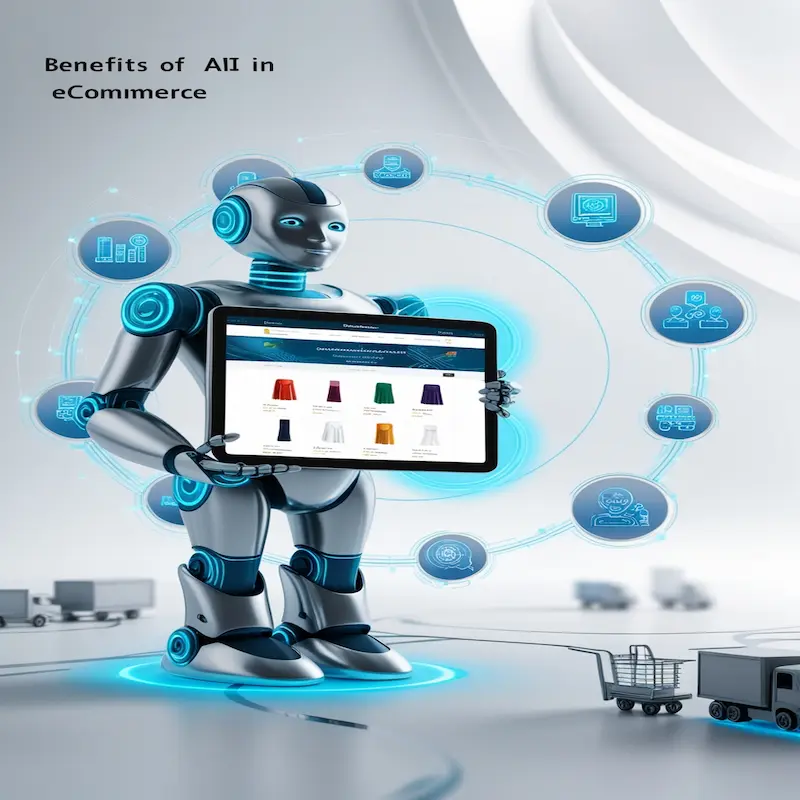
If you’re still running your eCommerce business without AI, it’s like showing up to a Formula 1 race on a skateboard.
Let’s not sugarcoat it: The eCommerce world has gone full Jetsons. Artificial Intelligence (AI) isn’t just a buzzword anymore—it’s your new silent partner. It works 24/7, doesn’t sleep, and doesn’t need coffee breaks. And if you’re using it right, it can turbocharge your online store in ways your competitors will envy.
So let’s unpack what AI is really doing for smart online retailers—and why you might want to hop on board before you’re left behind.
1. AI-Driven Personalization: The VIP Treatment at Scale
Imagine walking into a boutique and the staff already knows your style, size, and that you like your jeans dark wash, not distressed.
That’s what AI-driven personalization does—but digitally.
Using machine learning, AI tracks your customers’ behavior—clicks, purchases, even bounce rates—and custom-tailors their shopping experience.
How it works:
- Recommends products they actually want
- Adjusts landing pages dynamically
- Suggests bundles based on past purchases
Example:
Amazon’s “Customers who bought this also bought…” isn’t just friendly advice—it’s AI in action. And it works. 35% of Amazon’s revenue comes from these kinds of personalized recommendations.
Bold takeaway: AI isn’t creepy; it’s just ridiculously good at remembering things humans forget.
2. Smarter Search = More Sales
Ever typed “black hoodie with skull” and ended up with Halloween décor?
Traditional search is… well, kinda dumb. But AI-powered search understands intent, not just words.
Enter:
- Natural Language Processing (NLP): Understands how people really talk.
- Visual Search: Let customers upload a picture and find the exact (or similar) item.
- Voice Search Optimization: With more people saying “Hey Siri, buy dog treats,” this is the future.
Brands using this:
ASOS and Wayfair are already killing it with AI-powered visual search.
3. Inventory and Supply Chain Automation
Let’s get real: inventory management is about as fun as doing taxes.
But with AI in your supply chain, it’s like having a logistics guru on autopilot.
What AI does:
- Predicts demand spikes (think: Christmas, Super Bowl, random TikTok virality)
- Reduces overstock and stockouts
- Streamlines delivery routes and warehouse ops
Stat you’ll want to quote:
Retailers using AI in inventory planning see up to 20% reduction in logistics costs.
(McKinsey)
4. Chatbots: The Sales Reps That Never Sleep
It’s 2 a.m. A customer is asking about shipping times. Your human support team is snoring.
Solution?
An AI-powered chatbot that’s witty, fast, and doesn’t miss a beat.
Benefits:
- 24/7 support = happier customers
- Handles thousands of chats at once
- Learns and improves over time
Good bots don’t just answer questions—they upsell while doing it.
Try this:
If you’re not using a tool like Tidio, Drift, or Intercom, you’re probably losing conversions while you sleep.
5. Fraud Detection: Your Invisible Bodyguard
Online scams are as real as bad Wi-Fi.
But AI-powered fraud detection systems are designed to sniff out suspicious behavior like a bloodhound.
AI can detect:
- Unusual order patterns
- IP anomalies
- Payment fraud (before it hits your account)
Use case:
PayPal’s AI identifies and blocks fraudulent transactions in milliseconds—saving millions annually.
Bottom line: Let AI catch the crooks, so you can focus on customers.
6. AI Copywriting and Visual Tools (Yes, That Includes Me)
Let’s talk content—product descriptions, emails, ads. You could spend hours writing them… or use AI to crank out 20 in under a minute.
Tools like:
- Jasper for persuasive product copy
- Copy.ai for email headlines that actually get opened
- Canva’s Magic Design for AI-enhanced visuals
But—and here’s the kicker—don’t fully automate your brand’s voice. Use AI to assist, not replace your creative flair.
AI writes fast. You write with soul. Together? Dangerous combo.
7. Predictive Analytics: See the Future Before Your Competition
You know what’s better than reacting to customer behavior?
Predicting it.
AI lets you tap into predictive analytics—forecasting trends, demand, churn rates, and even what customers might buy next.
Think:
- Personalized discounts based on likelihood to convert
- Predicting lifetime value of a customer
- Sending reminder emails right before they abandon cart
This isn’t magic. It’s data + machine learning = your new secret weapon.
Traditional eCommerce vs. AI-Enhanced eCommerce
| Feature | Traditional Approach | AI-Enhanced Approach |
|---|---|---|
| Product Recommendations | Manual or generic | Hyper-personalized in real-time |
| Customer Service | Business hours only | 24/7 AI chatbot assistance |
| Inventory Management | Spreadsheet chaos | Predictive restocking & demand tracking |
| Marketing Campaigns | One-size-fits-all | Segmented, behavior-based targeting |
| Fraud Detection | Reactive (after damage done) | Proactive, real-time blocking |
Frequently Asked Questions (FAQs)
Q1: Is AI expensive to implement in eCommerce?
Not necessarily. Many tools like ChatGPT, Jasper, or Shopify’s AI integrations are affordable—even for small businesses.
Q2: Can AI replace my entire team?
No—and it shouldn’t. Think of AI as the assistant that boosts your team’s output, not a replacement for human creativity and strategy.
Q3: Will AI make my eCommerce store more secure?
Absolutely. From fraud detection to secure payment gateways, AI helps reduce risk and protect customer data.
Q4: What’s the easiest way to start using AI in my store?
Begin with AI chatbots and product recommendation engines—they’re low-risk, high-impact entry points.
Conclusion: Adapt or Fade Into Obscurity
You don’t need to build the next Amazon. But you do need to think like them.
AI isn’t just a nice-to-have. It’s the backbone of modern eCommerce success. It gives you agility, insight, speed—and yes, a serious advantage.
And let’s be honest: your customers expect this level of smart, seamless experience.
So the real question isn’t “Should I use AI?”
It’s “How fast can I start?”