GEO vs SEO: What You Need to Know in 2026

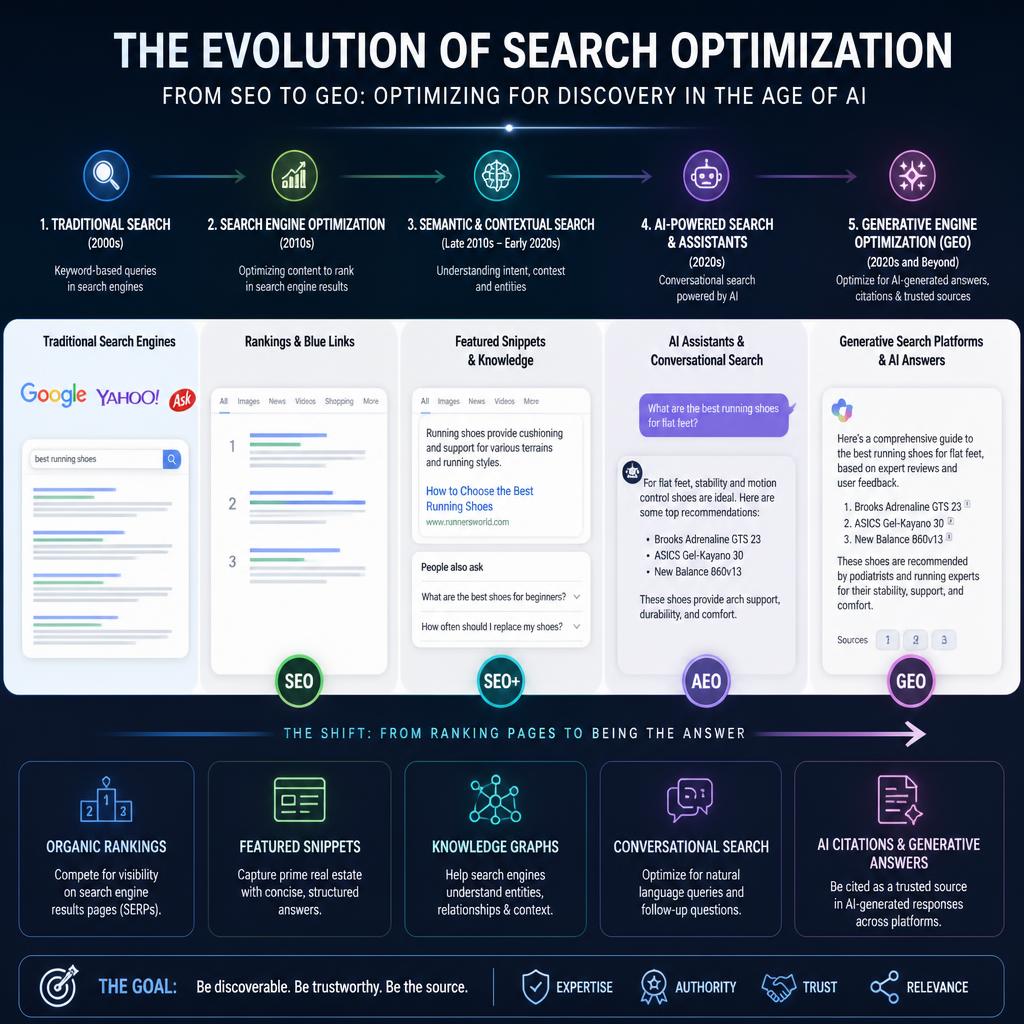
By 2026, the digital marketing landscape has split into two distinct but complementary strategies: traditional SEO (Search Engine Optimization) and the newer GEO (Generative Engine Optimization). Understanding the differences between these approaches and how to implement both is crucial for maintaining visibility in 2026. This comprehensive guide reveals what you need to know about GEO vs SEO in 2026.
What is SEO in 2026?
SEO remains the practice of optimizing your website to rank higher in traditional search engine results. However, SEO in 2026 has evolved significantly:
- Focus on E-E-A-T (Experience, Expertise, Authoritativeness, Trustworthiness)
- Emphasis on user intent and content quality
- Core Web Vitals and page experience signals
- Topic clusters and semantic SEO
- Entity recognition and knowledge graphs
- Brand signals and brand authority
- User engagement metrics
- Mobile-first indexing
- Featured snippets and rich results
- Link quality over quantity
What is GEO (Generative Engine Optimization)?
GEO is the practice of optimizing your content to be cited and featured in AI-powered generative search results. This includes:
- Getting cited by ChatGPT
- Appearing in Google’s AI Overviews
- Being featured in Perplexity AI results
- Appearing in Microsoft Copilot responses
- Getting cited by Claude and other LLMs
- Optimizing for answer engines
- Creating AI-friendly content
- Building AI visibility
Key Differences Between GEO and SEO
1. Primary Goal
SEO: Rank your website on the first page of search results for specific keywords.
GEO: Get your content cited and featured in AI-generated responses.
2. Content Structure
SEO: Optimize for keyword density, readability, and user engagement.
GEO: Structure content with answer capsules, clear formatting, and AI-parseable structure.
3. Authority Signals
SEO: Backlinks, domain authority, brand mentions, and user engagement.
GEO: Original research, expert credentials, data accuracy, and source credibility.
4. Content Type Preferences
SEO: Long-form content, blog posts, guides, and resource pages.
GEO: Answer-first content, research reports, data-driven articles, and expert commentary.
5. Keyword Strategy
SEO: Target specific keywords with search volume and intent.
GEO: Target question-based queries and informational intent.
6. Link Building
SEO: Build high-quality backlinks from authoritative sites.
GEO: Build citations and references in AI responses (not traditional links).
7. Measurement
SEO: Track rankings, traffic, conversions, and ROI.
GEO: Track AI citations, appearance in AI responses, and referral traffic from AI platforms.
How GEO and SEO Overlap
While different, GEO and SEO share many similarities:
- Both require high-quality, original content
- Both value authority and expertise
- Both require proper technical implementation
- Both benefit from brand building
- Both need accessibility and crawlability
- Both require regular updates and maintenance
- Both value user experience
- Both require understanding user intent
The GEO Strategy for 2026
Step 1: Create Answer-First Content
Structure your content to provide direct answers:
- Start with a clear, concise answer (40-60 words)
- Use question-based headings
- Create dedicated answer capsules
- Provide supporting details after the answer
- Include relevant data and statistics
Step 2: Optimize for AI Parsing
Make your content easy for AI systems to understand:
- Use semantic HTML structure
- Implement schema markup
- Use clear formatting and hierarchy
- Include tables and data visualizations
- Use bullet points and lists
Step 3: Build Original Research and Data
Create unique content that AI systems want to cite:
- Conduct original surveys and studies
- Publish proprietary research
- Share unique insights and analysis
- Create industry benchmarks
- Develop case studies with results
Step 4: Establish Authority and Credibility
Build the credibility that AI systems recognize:
- Establish author expertise
- Build domain authority
- Get featured in reputable publications
- Build brand mentions and citations
- Develop industry recognition
Step 5: Ensure AI Crawler Access
Make sure AI systems can find and crawl your content:
- Verify robots.txt allows crawling
- Ensure content is publicly accessible
- Avoid blocking AI crawlers
- Use proper meta tags
- Implement XML sitemaps
The SEO Strategy for 2026
While GEO is important, traditional SEO remains crucial:
- Conduct thorough keyword research
- Create comprehensive, high-quality content
- Build high-quality backlinks
- Optimize technical SEO
- Improve core web vitals
- Build brand authority
- Optimize for featured snippets
- Monitor and adjust based on rankings
Should You Choose GEO or SEO?
The answer is: both. In 2026, successful digital marketing requires implementing both strategies:
- SEO drives traffic from traditional search results
- GEO drives traffic from AI-powered platforms
- Both contribute to overall visibility
- Both build brand authority
- Both drive qualified traffic
- Both are complementary, not competitive
GEO and SEO Implementation Timeline
Month 1-2: Foundation
- Audit current content
- Identify GEO and SEO opportunities
- Plan content strategy
- Set up tracking and measurement
Month 3-4: Implementation
- Create answer-first content
- Optimize existing content for both GEO and SEO
- Build backlinks for SEO
- Create original research for GEO
Month 5-6: Optimization
- Monitor rankings and citations
- Adjust strategy based on results
- Scale successful tactics
- Test new approaches
Conclusion
GEO and SEO are complementary strategies that together create a comprehensive approach to digital visibility in 2026. By understanding the differences and implementing both strategies, you can maximize your visibility across both traditional search results and AI-powered platforms.
Sources
- eIntelligence – GEO vs SEO 2026
- eMarketer – GEO and AEO FAQ
- LLM Refs – Generative Engine Optimization