How to Earn Editorial Backlinks: Complete Strategy Guide
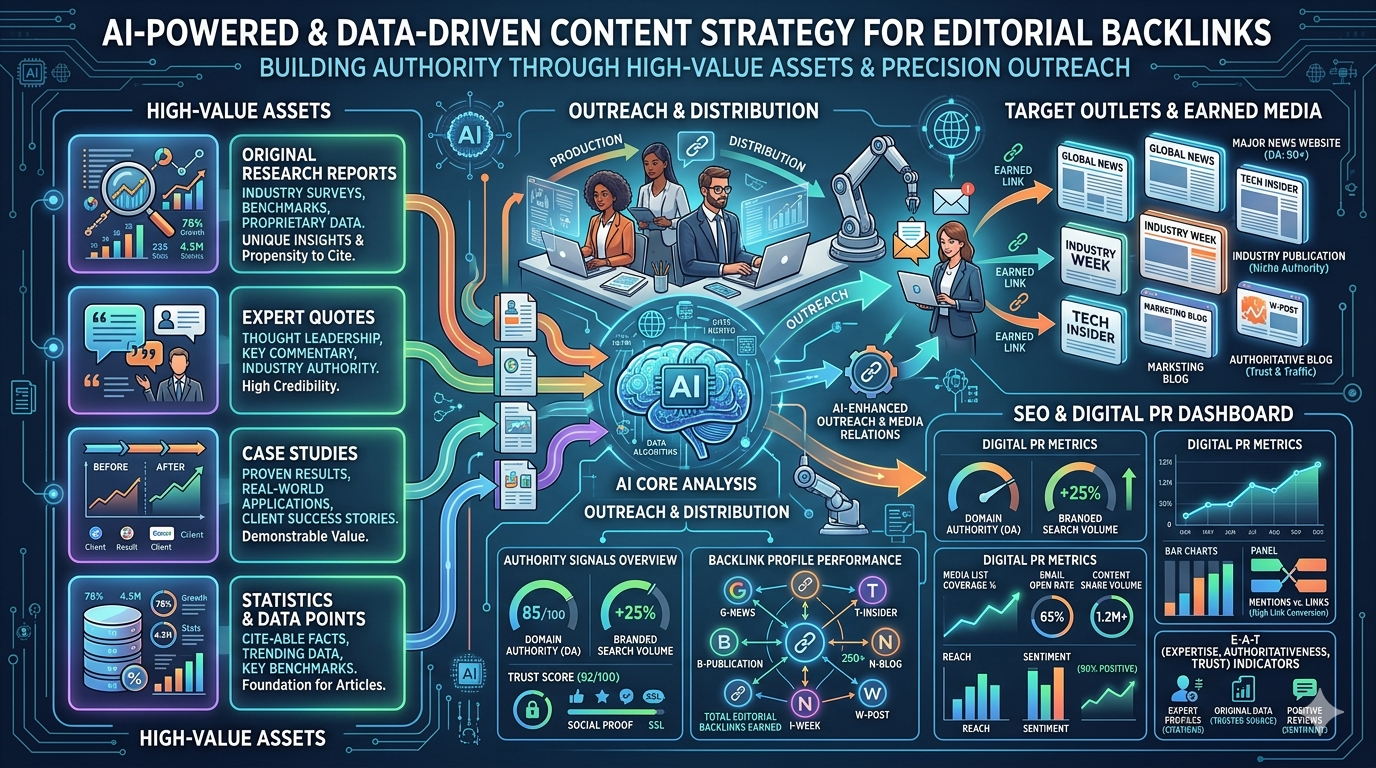
Editorial backlinks remain one of the strongest ranking signals in modern SEO. Despite the evolution of search algorithms, artificial intelligence, and Google’s increasing ability to understand content quality, editorial links continue to separate authoritative websites from average ones. Unlike paid links, reciprocal exchanges, or manually placed backlinks, editorial links are earned because another publisher genuinely believes your content deserves to be referenced.
As search engines become better at evaluating trust, expertise, and topical authority, earning editorial backlinks has shifted from being simply a link building tactic to becoming an overall content marketing strategy. Websites that consistently publish original research, expert insights, practical tools, and comprehensive resources naturally attract citations from journalists, bloggers, industry publications, universities, and high-authority websites.
In 2026, successful SEO is no longer about acquiring the highest number of backlinks. Instead, it is about earning the right backlinks from trustworthy sources that genuinely improve the user experience. One editorial backlink from a respected publication can often provide more ranking power than dozens of low-quality directory or guest post links.
This comprehensive guide explains everything you need to know about editorial backlinks—from understanding how they work to implementing proven strategies that consistently generate natural links. Whether you manage a business website, SaaS platform, affiliate site, digital publication, or personal blog, these techniques will help you build long-term authority while staying aligned with Google’s quality guidelines.
What Are Editorial Backlinks?
Editorial backlinks are hyperlinks that website owners, journalists, bloggers, editors, or content creators voluntarily place within their content because they believe another page provides valuable information for their readers.
Unlike outreach-generated links, editorial backlinks are not purchased, exchanged, or required by agreement. They are given naturally as citations, references, or recommended resources.
Imagine a journalist writing an article about cybersecurity trends. While researching statistics, they discover your original industry report containing unique survey data. Instead of copying your information without attribution, they reference your research by linking to your website.
That hyperlink is an editorial backlink.
The decision to add the link comes entirely from the publisher, making it one of the most trusted forms of endorsement on the web.
Examples include:
- A technology blog citing your benchmark study.
- A marketing publication referencing your original statistics.
- A university linking to your educational resource.
- A news website quoting your industry research.
- A SaaS company recommending your free calculator.
- An industry expert including your guide as recommended reading.
These links demonstrate that your content contributes genuine value rather than existing solely to manipulate search rankings.
Editorial Backlinks vs Other Types of Backlinks
Not every backlink carries the same weight. Understanding the differences helps prioritize the right strategies.
| Link Type | How It’s Earned | SEO Value | Risk |
|---|---|---|---|
| Editorial Links | Naturally earned | Very High | Very Low |
| Guest Post Links | Outreach | Medium to High | Low |
| Directory Links | Submission | Low | Medium |
| Forum Links | User generated | Low | Medium |
| Paid Links | Purchased | High Risk | Very High |
| Link Exchanges | Mutual agreement | Limited | Medium |
| Press Release Syndication | Distribution | Low | Low |
Editorial backlinks consistently outperform other link types because they reflect genuine editorial judgment.
Google’s ranking systems are designed to reward links that exist because they improve the content—not because someone requested or paid for them.
Why Editorial Backlinks Matter More Than Ever
Search engines have become increasingly sophisticated at understanding context, authority, and trust.
Years ago, websites could rank simply by acquiring thousands of backlinks regardless of quality.
Today, Google’s algorithms analyze:
- Relevance between linking pages
- Editorial context
- Website authority
- User engagement
- Link placement
- Anchor text naturalness
- Content quality
- Topical expertise
Editorial backlinks satisfy nearly every quality signal Google looks for.
Instead of appearing artificial, they exist naturally inside valuable content where readers actually expect to find references.
This is precisely the kind of linking pattern Google’s systems are designed to reward.
The SEO Benefits of Editorial Backlinks
1. Increased Domain Authority
Although Domain Authority itself is a third-party metric rather than a Google ranking factor, websites earning consistent editorial links generally build stronger overall authority.
As respected publications reference your work, your reputation within your industry grows.
This makes future content easier to rank because Google increasingly recognizes your website as a trusted source.
2. Higher Organic Rankings
Editorial backlinks transfer authority between relevant websites.
When authoritative websites link to your pages, Google gains additional confidence that your content deserves visibility.
This often leads to improvements for:
- Competitive keywords
- Long-tail keywords
- Topic clusters
- Supporting pages
- Category pages
Instead of helping only one page, editorial links often strengthen the authority of the entire domain.
3. Better Indexing
Search engine crawlers discover new content by following links.
Editorial backlinks from frequently crawled websites allow Google to find and index your pages faster.
Large publishers often receive constant crawling, meaning links placed there can accelerate content discovery.
4. Increased Referral Traffic
Editorial links generate visitors—not just ranking signals.
Unlike low-quality backlinks hidden inside irrelevant directories, editorial backlinks appear where readers are actively consuming related content.
For example:
A reader finishes an article discussing email marketing benchmarks.
The author references your original research.
Curious readers click the link to learn more.
This creates highly qualified referral traffic consisting of users already interested in your niche.
5. Stronger Brand Recognition
Every editorial mention increases brand visibility.
Even readers who never click your link become familiar with your company.
Repeated exposure across respected publications gradually builds authority and trust.
Eventually, people begin searching for your brand directly.
Branded searches are often associated with stronger overall SEO performance because they indicate growing market recognition.
6. Long-Term Ranking Stability
Editorial backlinks rarely disappear.
Unlike temporary partnerships or sponsored campaigns, publishers usually keep useful references online for years.
Many original research studies continue earning links five or even ten years after publication.
This creates a compounding SEO effect.
Each new editorial link strengthens your authority while existing links continue contributing value.
How Google Evaluates Editorial Links
Google doesn’t simply count backlinks.
Instead, it evaluates numerous quality signals surrounding each link.
Understanding these signals helps you create content that naturally attracts stronger editorial references.
Relevance
The linking page should discuss topics closely related to your own content.
A finance website linking to your investment guide carries significantly more relevance than a random entertainment blog.
Topical alignment is one of the strongest indicators of editorial quality.
Context
Links embedded naturally within the main article provide more value than links hidden in footers or sidebars.
For example:
According to our industry benchmark study…
This contextual placement demonstrates that the link supports the article rather than serving promotional purposes.
Authority
Links from respected publications generally pass greater trust.
Examples include:
- Major news organizations
- Industry-leading blogs
- Government websites
- Universities
- Professional associations
- Established SaaS companies
Authority is earned over time through consistent quality publishing.
Editorial Intent
Google attempts to understand why a link exists.
Questions include:
- Does it improve the article?
- Does it help readers?
- Does it cite supporting evidence?
- Is it naturally integrated?
- Would the article still make sense without it?
Editorial links almost always pass this test because they genuinely improve the content.
User Experience
If readers frequently click a referenced resource and spend time engaging with it, this reinforces the value of the editorial recommendation.
Helpful resources naturally generate stronger user engagement than pages created solely for SEO.
Characteristics of High-Quality Editorial Backlinks
Not every editorial backlink delivers the same impact.
The strongest editorial links typically share several characteristics.
They Come From Relevant Websites
Industry relevance significantly increases the value of a backlink.
For example, if you publish SEO content, links from digital marketing websites carry more weight than links from unrelated niches.
Google understands topical relationships across websites.
They Appear Naturally
Editorial links are woven into sentences where readers expect supporting references.
They never feel forced.
Instead of saying:
“Click here for our amazing service.”
A natural editorial reference might read:
“Recent industry research found that 72% of businesses prioritize organic traffic growth.”
This subtle approach enhances credibility.
They Support Valuable Information
The best editorial links back up:
- Statistics
- Research findings
- Expert opinions
- Tutorials
- Case studies
- Frameworks
- Original methodologies
Content that educates naturally earns more references than purely promotional pages.
They Continue Driving Value
Some backlinks lose relevance quickly.
Editorial backlinks often remain useful for years because they point to evergreen resources.
Examples include:
- Industry glossaries
- Ultimate guides
- Research reports
- Educational tutorials
- Benchmark studies
- Annual statistics pages
These assets continue attracting new citations long after publication.
Why Editorial Links Are Difficult to Replicate
Editorial backlinks cannot simply be purchased or manufactured at scale.
They require publishers to independently decide your content deserves attention.
This scarcity makes them significantly more valuable than easily acquired links.
Competitors can copy your keywords.
They can imitate your page structure.
They can replicate your products.
What they cannot easily duplicate is the trust you’ve built through genuinely valuable content that respected publishers choose to reference.
That is why editorial backlinks remain one of the most durable competitive advantages in SEO.
Proven Strategies to Earn Editorial Backlinks Naturally
Creating exceptional content is only the first step. To consistently earn editorial backlinks, you need a strategy that makes your content visible to journalists, bloggers, editors, and industry experts. The following proven techniques have helped businesses, SaaS companies, affiliate websites, and digital publishers attract high-quality backlinks without relying on paid link schemes or excessive outreach.
Create Original Industry Research
Original research is one of the most powerful assets for earning editorial backlinks. Journalists, bloggers, and content marketers are constantly searching for fresh statistics and unique data to support their articles. If your website becomes the original source of valuable information, other websites will naturally cite and link to your research.
You do not need a massive budget to publish research. A customer survey, an analysis of industry trends, or a large dataset collected from public sources can become highly linkable content. The key is to present information that cannot easily be found elsewhere.
For example, instead of writing another article titled “SEO Tips for Beginners,” create a report like “Analysis of 50,000 Search Results: What Actually Ranks on Google in 2026.” Original studies like this often generate backlinks for years because writers continue referencing the data in future articles.
Publish Annual Statistics Pages
Statistics pages are among the highest-performing content types for earning editorial backlinks. Every year, thousands of writers search for updated statistics before publishing new content. If your website provides accurate and well-organized statistics with proper citations, it becomes a trusted resource for journalists and bloggers.
A strong statistics page should include the latest industry data, visual charts, percentage breakdowns, and key insights. Updating the page regularly increases its chances of maintaining rankings while attracting new backlinks as fresh content is published across the web.
Instead of creating a new page every year, consider updating the existing URL with the latest information to preserve its authority and backlink profile.
Build Comprehensive Ultimate Guides
Editors prefer linking to resources that answer every important question on a topic. A detailed guide is much more valuable than a short article because it saves readers from searching multiple websites.
An effective ultimate guide should explain concepts from beginner to advanced levels while including examples, visuals, expert recommendations, FAQs, and practical checklists. The goal is to make your guide the most complete resource available.
Long-form evergreen content continues attracting editorial backlinks long after publication because it remains useful for readers and content creators.
Develop Free Online Tools
Interactive tools naturally attract editorial backlinks because they provide immediate value instead of simply offering information.
Useful examples include SEO calculators, ROI calculators, pricing estimators, keyword difficulty checkers, headline analyzers, password generators, shipping calculators, and budget planners.
When bloggers recommend helpful tools to their audiences, they often include editorial links because readers benefit from using them directly.
Even simple calculators can outperform lengthy articles in terms of backlink acquisition if they solve a common problem.
Publish Detailed Case Studies
Real-world case studies provide evidence that theories actually work. Editors appreciate citing practical examples because they strengthen their own content with proven results.
An effective case study should describe the initial challenge, explain the strategy used, present measurable outcomes, and discuss lessons learned. Include screenshots, graphs, timelines, and performance metrics whenever possible.
Transparent case studies build credibility while encouraging other websites to reference your findings.
Create High-Quality Visual Assets
Images are shared across the internet every day. Original visual content increases the likelihood of earning editorial backlinks because publishers often reference the original creator.
Useful visual assets include infographics, comparison tables, workflow diagrams, process illustrations, timelines, data visualizations, industry maps, and interactive graphics.
Rather than designing graphics solely for aesthetics, focus on simplifying complex information into easy-to-understand visuals that readers will want to reference in their own content.
Publish Expert Roundup Articles
Expert roundup articles feature insights from multiple industry professionals on a single topic. Since the article contains opinions from recognized experts, it naturally attracts attention and often earns backlinks from participants who share or reference the publication.
Choose a question that addresses a common industry challenge, invite experienced professionals to contribute concise answers, and organize their responses into a well-structured article.
This approach also helps establish relationships with influencers who may reference your future content.
Become the Original Source of Breaking Industry News
Many websites simply rewrite news published elsewhere. Instead, focus on becoming the first publisher to report important developments within your niche.
Breaking industry news can include product launches, technology updates, market reports, legal changes, acquisitions, or emerging trends.
When your website becomes the original source, other publications often reference your reporting through editorial backlinks.
Speed matters, but accuracy is even more important. Publishing verified information builds trust and encourages future citations.
Create Resource Libraries
Instead of publishing isolated articles, build comprehensive resource centers dedicated to specific topics.
A resource library may include guides, templates, downloadable checklists, calculators, videos, glossaries, research papers, and recommended tools.
Because these libraries provide extensive value in one location, editors frequently link to them as comprehensive references for readers seeking additional information.
Organize content into logical categories to improve user experience and encourage deeper engagement.
Publish Templates That Save Time
Professionals appreciate resources that eliminate repetitive work.
Templates for business plans, email outreach, content calendars, marketing strategies, SEO audits, proposal documents, and project management are highly shareable because they provide immediate practical value.
Whenever writers recommend productivity resources, downloadable templates often receive editorial backlinks due to their usefulness.
Include editable versions whenever possible to maximize user satisfaction.
Create Content That Answers Journalist Questions
Journalists frequently need supporting information while writing stories.
Ask yourself what questions reporters commonly search before publishing an article.
Examples include:
What are the latest industry statistics?
How large is the market?
What trends are emerging?
What common mistakes do businesses make?
Which tools dominate the industry?
Creating pages that answer these questions positions your website as a trusted reference source.
The more helpful your content becomes, the more likely journalists are to cite it naturally instead of searching elsewhere.
Build Evergreen Content That Improves Over Time
Evergreen content remains relevant regardless of changing trends.
Unlike seasonal news articles that lose traffic after a few weeks, evergreen resources continue earning backlinks for years.
Examples include beginner guides, glossaries, tutorials, industry definitions, comparison articles, educational resources, and complete frameworks.
Review evergreen content every few months by updating statistics, screenshots, examples, and recommendations.
Search engines reward fresh information, while editors prefer linking to updated resources rather than outdated pages.
Focus on Topical Authority Instead of Individual Articles
Modern SEO rewards websites that demonstrate expertise across an entire subject rather than publishing isolated posts.
Instead of creating one article about editorial backlinks, build an entire content cluster covering digital PR, link building strategies, anchor text optimization, broken link building, HARO alternatives, outreach techniques, content marketing, and backlink analysis.
Internal links connecting these related pages help search engines understand your expertise while giving editors multiple resources worth referencing.
The stronger your topical authority becomes, the easier it is to earn editorial backlinks across your entire website instead of relying on a single successful article.
Digital PR Strategies That Generate Editorial Backlinks
Digital PR has become one of the most effective methods for earning editorial backlinks because it combines traditional public relations with modern content marketing. Instead of asking websites for links, Digital PR focuses on creating stories that journalists genuinely want to publish.
A successful Digital PR campaign starts with identifying a newsworthy angle. This could be original research, a unique industry survey, a market analysis, or an interesting trend supported by reliable data. Journalists are always looking for fresh information that adds value to their reporting, and providing that information increases the chances of earning natural editorial links.
Timing also plays an important role. Publishing a report or study while a topic is trending makes it more likely that news outlets and bloggers will reference your content. Seasonal events, product launches, economic changes, and annual industry reports often create excellent opportunities for Digital PR campaigns.
Building relationships with journalists before you need coverage is equally important. Follow reporters who cover your niche, engage with their work on social media, and understand the type of stories they publish. When you eventually share your research, they are more likely to recognize your name and consider your content.
Use Data Storytelling to Attract Journalists
Raw data alone rarely earns backlinks. The real value comes from transforming numbers into compelling stories.
For example, instead of publishing a spreadsheet containing survey responses, explain what the data reveals about the industry, identify surprising trends, compare current results with previous years, and discuss what businesses can learn from the findings.
Charts, graphs, and visual summaries make complex information easier to understand and increase the likelihood that publishers will reference your work.
When your research answers important industry questions, it becomes a reliable source that journalists can confidently cite in future articles.
Create Linkable Assets
A linkable asset is a piece of content specifically designed to earn backlinks because it provides exceptional value.
Examples include comprehensive guides, original research reports, industry statistics pages, free online tools, calculators, templates, interactive maps, glossaries, and downloadable resources.
Unlike ordinary blog posts, linkable assets continue attracting backlinks for months or even years after publication. They become reference materials that other websites naturally recommend to their audiences.
When creating a linkable asset, focus on solving a real problem. Ask yourself whether someone writing about your topic would benefit from linking to your resource. If the answer is yes, you are building content with long-term backlink potential.
What is the new AI trend in marketing?
Build Relationships with Industry Experts
Networking remains one of the most overlooked aspects of editorial link building.
Industry experts frequently publish articles, participate in podcasts, speak at conferences, and contribute to newsletters. Building genuine professional relationships increases your visibility and creates opportunities for natural mentions.
Engage thoughtfully with experts by commenting on their articles, sharing their content, participating in webinars, and contributing meaningful insights to discussions.
Over time, these relationships can lead to interview opportunities, collaborative projects, podcast invitations, and editorial references that generate high-quality backlinks.
Contribute Expert Opinions
Many journalists look for expert commentary to strengthen their articles.
Providing concise, well-supported opinions on current industry developments increases your chances of being quoted and linked as a credible source.
Rather than promoting your products, focus on offering educational insights that help readers better understand the topic.
Consistently sharing valuable expertise helps establish your reputation as an authority, making future editorial opportunities more likely.
Refresh Existing Content Regularly
Editorial backlinks often point to evergreen resources. However, outdated information reduces the likelihood that publishers will continue referencing your content.
Review important pages several times each year and update outdated statistics, screenshots, examples, product recommendations, and industry trends.
Fresh content signals that your resource remains reliable, encouraging editors to continue using it as a trusted reference.
Regular updates also improve search visibility, increasing the chances that journalists discover your content while conducting research.
Common Mistakes That Prevent Editorial Backlinks
Many websites produce high-quality content but still struggle to earn editorial backlinks because they overlook fundamental principles.
One common mistake is publishing generic articles that repeat information already available on hundreds of other websites. Editors have little reason to reference content that adds nothing new to the conversation.
Another mistake is prioritizing quantity over quality. Publishing dozens of average articles rarely produces the same results as creating a few exceptional resources that become industry references.
Ignoring user experience is another significant problem. Slow-loading pages, intrusive advertisements, poor formatting, and confusing navigation discourage visitors from engaging with your content and reduce the likelihood of earning backlinks.
Some website owners also make the mistake of aggressively requesting backlinks immediately after publishing content. Editorial links are earned through value rather than pressure. While promotion is important, it should focus on making people aware of genuinely useful resources instead of directly asking for links.
Finally, failing to update evergreen content causes valuable resources to become outdated. Journalists prefer linking to pages containing current information, making regular maintenance essential for long-term success.
How do I use AI to promote my website?
HARO Alternatives for Link Building
What Makes a High-Quality Backlink? 2026
Essential Tools for Editorial Link Building
The right tools can simplify research, monitor backlinks, and identify new opportunities.
Backlink analysis platforms help you discover which content attracts links within your industry, making it easier to identify successful content formats.
Media databases allow you to find journalists covering your niche and understand the topics they regularly write about.
Content research tools reveal trending subjects, frequently asked questions, and popular resources that publishers are already referencing.
Google Alerts can notify you when your brand, products, or target keywords appear online, allowing you to identify potential editorial opportunities and engage with relevant discussions.
Analytics platforms help measure referral traffic, user engagement, and the long-term impact of editorial backlinks on organic performance.
A 90-Day Editorial Backlink Action Plan
Building editorial backlinks requires consistency rather than quick wins.
During the first month, focus on researching competitors, identifying backlink opportunities, and creating one exceptional linkable asset such as an original research report, comprehensive guide, or free online tool.
In the second month, publish supporting content around your primary resource, promote it through social media, newsletters, industry communities, and Digital PR campaigns while building relationships with journalists and niche influencers.
During the third month, monitor backlinks, refresh your content with additional insights, answer journalist requests, participate in expert discussions, and continue expanding your content cluster with related articles.
Repeating this process consistently builds topical authority while increasing the number of editorial backlinks earned naturally over time.
Frequently Asked Questions
Are editorial backlinks better than guest post backlinks?
Yes. Editorial backlinks are generally considered more valuable because they are voluntarily given by publishers based on the quality of your content rather than being acquired through outreach or agreements.
How long does it take to earn editorial backlinks?
The timeline varies depending on your niche, content quality, promotion strategy, and website authority. Some resources attract links within days, while others gradually accumulate backlinks over several months.
Can small websites earn editorial backlinks?
Absolutely. Small websites often succeed by publishing unique research, creating valuable tools, or producing comprehensive resources that larger competitors have overlooked.
Do editorial backlinks improve rankings immediately?
Editorial backlinks usually contribute to long-term SEO growth rather than producing instant ranking improvements. Their impact increases as your website earns additional authority over time.
What type of content earns the most editorial backlinks?
Original research, industry statistics, comprehensive guides, free online tools, calculators, templates, visual content, and detailed case studies consistently perform well because they provide unique value that publishers want to reference.
Conclusion
Editorial backlinks remain one of the strongest indicators of trust, authority, and relevance in modern SEO. Unlike artificial link-building tactics, they are earned through exceptional content, original insights, and genuine contributions to your industry.
Businesses that consistently publish research, educational resources, interactive tools, and evergreen content position themselves as trusted sources that journalists, bloggers, and publishers naturally reference. These backlinks not only improve search rankings but also strengthen brand credibility, increase referral traffic, and establish long-term topical authority.
Instead of chasing large numbers of low-quality backlinks, invest your efforts in creating resources that deserve to be cited. Over time, every valuable guide, research report, or free tool becomes another opportunity to earn editorial backlinks naturally. This sustainable approach aligns with Google’s quality standards and provides lasting SEO results that continue generating value for years after publication.