
Digital PR Campaign Ideas: Proven Strategies for 2026
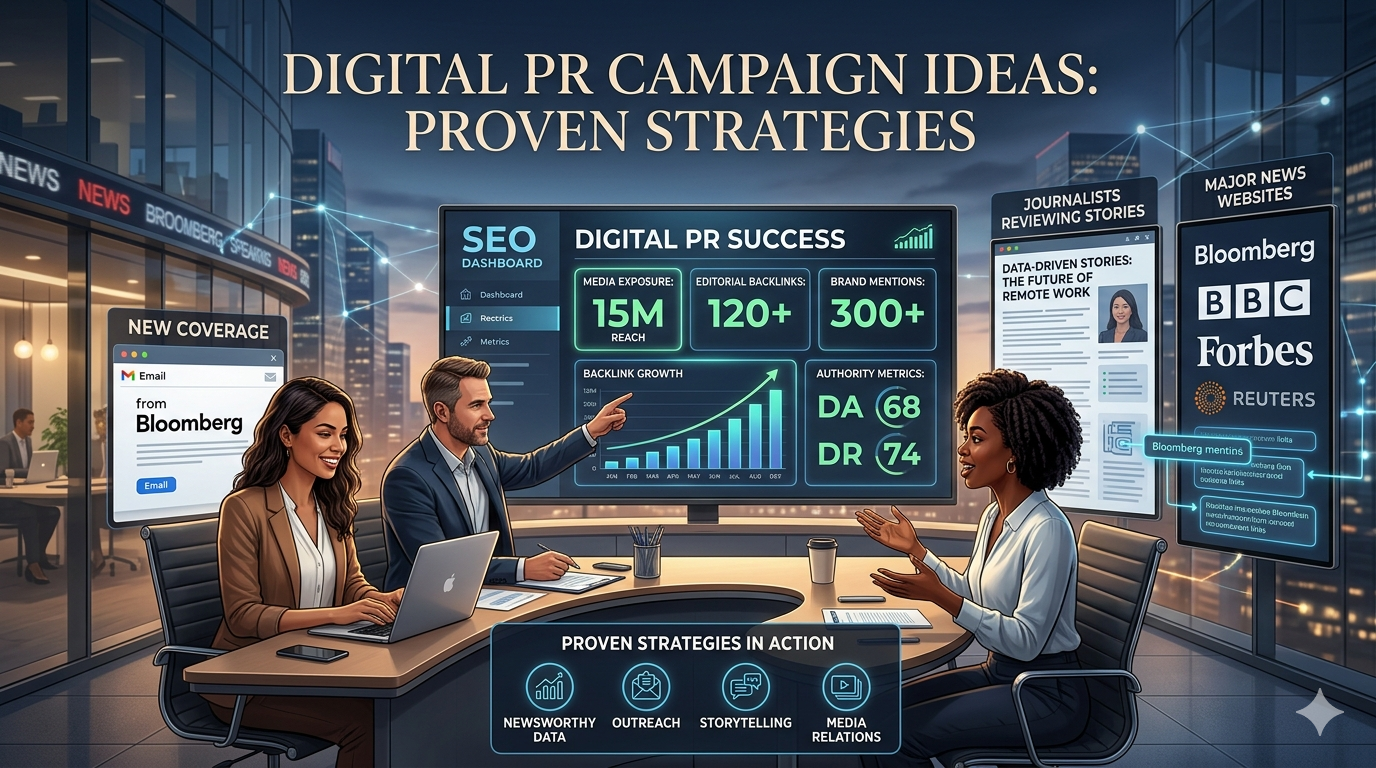
Digital PR Campaign Ideas: The Ultimate Guide to Building Authority and Earning High-Quality Backlinks in 2026
Digital PR has become one of the most powerful marketing strategies for businesses that want to increase brand awareness, earn authoritative backlinks, and improve search engine rankings. Unlike traditional public relations, which mainly focuses on newspapers, television, and offline media, digital PR is designed for the online world where search engines, digital publications, blogs, podcasts, influencers, and social media all contribute to a brand’s visibility.
As Google’s algorithms continue to prioritize authority, expertise, and trustworthiness, digital PR has evolved from a branding tactic into one of the most effective SEO strategies available. High-quality editorial backlinks earned through successful digital PR campaigns send strong trust signals to search engines while also driving targeted referral traffic and increasing brand recognition.
Whether you run an eCommerce store, SaaS company, startup, agency, local business, or personal brand, investing in digital PR can help establish your business as an industry leader. However, successful campaigns require much more than simply sending press releases. They involve creating genuinely valuable content, understanding what journalists are looking for, and developing stories that publications actually want to cover.
This guide explores the best digital PR campaign ideas for 2026, explains why they work, and provides actionable strategies that can help you generate media coverage, build authority, and earn natural editorial backlinks consistently.
What Is Digital PR?
Digital PR is the process of increasing a brand’s online visibility by earning coverage from websites, online magazines, newspapers, bloggers, podcasts, influencers, and digital media outlets.
Instead of buying links or relying on outdated SEO tactics, digital PR focuses on creating newsworthy content that naturally attracts media attention.
A successful digital PR campaign typically results in:
High-quality editorial backlinks
Brand mentions
Referral traffic
Media interviews
Social media exposure
Improved brand authority
Higher search engine rankings
Unlike traditional advertising, digital PR generates earned media. Publications choose to feature your story because it offers genuine value to their audience rather than because you paid for placement.
Why Digital PR Is More Important Than Ever
Search engines are becoming increasingly sophisticated at evaluating the quality and relevance of backlinks. Links earned through respected publications carry significantly more weight than artificial or low-quality links.
Digital PR helps businesses build authority in several ways.
First, editorial backlinks improve domain authority and increase the likelihood of ranking for competitive keywords.
Second, media coverage exposes your brand to new audiences that may never have discovered your website through search alone.
Third, being featured on trusted websites builds credibility with customers, investors, and potential partners.
Finally, successful campaigns create assets that continue generating backlinks and traffic long after publication.
Rather than thinking of digital PR as a one-time marketing activity, successful companies treat it as an ongoing investment in brand authority.
What Makes a Successful Digital PR Campaign?
Not every campaign attracts journalists.
The most successful campaigns usually share several characteristics.
They present original information rather than repeating existing content.
They solve a problem or answer an important question.
They include data that supports the story.
They relate to current trends.
They provide value for readers.
They are easy for journalists to reference.
When planning your campaign, always ask yourself one question:
“Would someone who has never heard of my company still find this story interesting?”
If the answer is yes, you’re heading in the right direction.
Campaign Idea 1: Publish Original Research
Original research remains one of the most effective digital PR strategies because journalists constantly need reliable statistics to support their articles.
Rather than relying on publicly available information, conduct your own research.
Examples include:
Customer surveys
Industry salary reports
Consumer behavior studies
Market trend analysis
Annual benchmark reports
Technology adoption surveys
Small business research
Regional studies
Even a survey with a few hundred participants can produce valuable insights if the methodology is sound.
For example, an SEO agency could survey 1,000 marketers about AI adoption in content marketing.
The resulting report may include dozens of unique statistics that journalists can reference throughout the year.
Whenever your statistics are cited, your website earns valuable editorial backlinks.
To maximize success:
Use charts and graphs.
Provide downloadable reports.
Include expert analysis.
Highlight surprising findings.
Publish supporting blog content.
Create a press release summarizing the most interesting statistics.
Original data often becomes linkable assets that continue earning backlinks for years.
Campaign Idea 2: Become the Industry Expert
Journalists constantly search for experts who can explain complicated topics.
Instead of waiting for opportunities, position yourself as the expert before journalists need you.
Publish educational articles.
Share industry predictions.
Comment on breaking news.
Create LinkedIn posts.
Appear on podcasts.
Host webinars.
Write guest articles.
As your reputation grows, journalists begin reaching out instead of the other way around.
Expert commentary is especially valuable because it requires little investment compared to large-scale research campaigns.
A single insightful quote can earn backlinks from respected publications if delivered at the right moment.
Campaign Idea 3: Create Newsworthy Company Announcements
Many businesses underestimate how many internal updates can become media stories.
Examples include:
Major product launches
Funding announcements
New technology
Strategic partnerships
International expansion
Major hiring announcements
Charity initiatives
Environmental sustainability programs
Significant milestones
Customer growth achievements
The key is framing the announcement around why it matters to readers instead of why it matters to your company.
Rather than saying your company released Version 3.0, explain how the update solves an important industry challenge.
Journalists care about impact, not marketing.
Campaign Idea 4: Publish Industry Trend Reports
Trend reports consistently attract backlinks because they help businesses understand what is happening within their industries.
A comprehensive trend report should include:
Current market analysis
Emerging technologies
Consumer behavior
Growth opportunities
Challenges
Predictions
Supporting statistics
Expert opinions
Trend reports often become annual publications that generate recurring media coverage every year.
As each edition is published, journalists reference previous reports while linking to the newest version.
This creates long-term SEO value.
Campaign Idea 5: Build Free Interactive Tools
Interactive tools attract backlinks because they solve real problems.
Popular examples include:
ROI calculators
Budget planners
SEO analyzers
Savings calculators
Loan calculators
Carbon footprint calculators
BMI calculators
Website audit tools
Marketing budget calculators
Keyword difficulty estimators
People naturally share useful tools.
Journalists also enjoy referencing practical resources that help readers solve problems immediately.
Unlike blog posts, interactive tools remain evergreen and can continue earning backlinks for years.
Campaign Idea 6: Create Data-Driven Infographics
Visual content simplifies complex information.
Infographics perform especially well when they present:
Survey results
Historical timelines
Industry comparisons
Statistical summaries
Process explanations
Step-by-step frameworks
Comparison charts
Market forecasts
Well-designed infographics increase the likelihood that bloggers and journalists will reference your research while linking back to the original source.
Always include an embed code beneath the infographic to make sharing easier.
Campaign Idea 7: Publish Expert Roundups
Expert roundup articles involve interviewing multiple professionals on a single topic.
For example:
Twenty SEO experts share their top ranking strategy.
Fifteen founders predict AI trends.
Thirty marketers reveal their favorite productivity tools.
Roundups provide several advantages.
Experts frequently share articles featuring their quotes.
Their audiences discover your content.
Multiple social shares increase visibility.
Relationships develop naturally.
Journalists often reference expert roundups because they summarize multiple perspectives in one location.
The more recognizable the contributors, the greater the likelihood of earning additional backlinks.
Campaign Idea 8: Create Contrarian Content
Sometimes challenging conventional wisdom generates significant attention.
However, controversial opinions should always be supported by evidence.
Examples include:
Why traditional keyword research is changing
Why more backlinks aren’t always better
Why smaller brands can outperform enterprise competitors
Why AI won’t replace expert writers
Strong opinions encourage discussion, increasing the likelihood of media coverage.
Focus on thoughtful analysis rather than sensational headlines.
Credibility should always come before controversy.
Digital PR Strategy 2026: AI and Automation
How to Automate SEO for WordPress Websites
Campaign Idea 9: Publish Annual Rankings
People love rankings.
Examples include:
Best cities for startups
Most affordable countries
Fastest growing industries
Top remote work destinations
Highest paying technology careers
Most sustainable companies
Safest travel destinations
Best universities
Rankings often generate local press coverage because regional publications enjoy reporting on how their cities or organizations performed.
This creates opportunities for dozens of natural backlinks from different sources.
Campaign Idea 10: Launch a Charity or Community Initiative
Campaigns that positively impact communities often receive strong media attention.
Examples include:
Scholarship programs
Environmental campaigns
Tree planting initiatives
Technology donations
Educational workshops
Community volunteering
Fundraising events
The story should focus on measurable impact rather than brand promotion.
Authenticity is essential.
Journalists can easily recognize publicity stunts.
Campaign Idea 11: Use Seasonal Campaigns
Seasonal topics naturally receive increased search interest.
Plan campaigns around:
New Year
Black Friday
Cyber Monday
Christmas
Back-to-school
Tax season
Earth Day
Halloween
Summer travel
Major sporting events
Prepare campaigns several weeks before journalists begin covering these topics.
Early preparation significantly improves coverage opportunities.
Campaign Idea 12: Create Industry Awards
Industry awards encourage participation while generating backlinks from nominees.
Examples include:
Best Startup Award
Innovation Award
Marketing Excellence Award
Customer Experience Award
AI Innovation Award
Winning companies frequently announce their achievements on their own websites while linking back to your awards page.
This creates a scalable link-building strategy.
How to Pitch Journalists Successfully
Great content alone isn’t enough.
Your pitch matters.
Keep it short.
Explain why the story matters.
Reference recent articles.
Include supporting statistics.
Avoid attachments unless requested.
Offer interviews if needed.
Respond quickly.
Always respect deadlines.
The easier your story is to publish, the higher your success rate.
Common Digital PR Mistakes
Many campaigns fail because marketers:
Write promotional press releases.
Target irrelevant journalists.
Send mass emails.
Ignore timing.
Lack original data.
Fail to follow up professionally.
Publish weak research.
Use misleading statistics.
Avoid these mistakes by focusing on genuine value rather than publicity.
Measuring Campaign Success
Track more than backlinks.
Measure:
Media mentions
Editorial backlinks
Referral traffic
Organic traffic growth
Keyword rankings
Brand searches
Social shares
Journalist relationships
Lead generation
Revenue influenced by PR campaigns
Long-term authority is far more valuable than a temporary spike in traffic.
Final Thoughts
Digital PR is no longer just a branding strategy—it has become one of the most effective methods for earning high-quality backlinks, improving organic visibility, and establishing lasting authority online. As competition for attention increases in 2026, businesses that consistently create original research, publish valuable resources, develop newsworthy stories, and build authentic relationships with journalists will outperform those relying on outdated link-building tactics.
The strongest digital PR campaigns don’t happen by accident. They are built on creativity, data, timing, and a deep understanding of what journalists and audiences truly care about. Whether you’re publishing industry reports, launching free tools, conducting surveys, creating interactive content, or positioning yourself as a trusted expert, every successful campaign should provide genuine value before asking for attention.
Instead of treating digital PR as a one-time marketing effort, make it an ongoing part of your SEO strategy. Over time, a library of high-quality campaigns can generate hundreds of editorial backlinks, strengthen your brand reputation, and create sustainable organic growth that continues delivering results long after each campaign is launched.

Advanced Digital PR Strategies for 2026
As digital marketing becomes increasingly competitive, brands must move beyond traditional press releases and basic outreach. Advanced digital PR strategies focus on creating assets that journalists actively seek out rather than waiting for media opportunities to appear.
One of the most effective approaches is combining digital PR with content marketing. Instead of publishing isolated campaigns, create content hubs around important industry topics. Each campaign can support multiple blog posts, infographics, videos, social media content, and downloadable resources. This not only increases the lifespan of your campaign but also creates additional internal linking opportunities that strengthen your website’s topical authority.
Another advanced strategy is leveraging proprietary company data. Every business collects valuable information through customer interactions, website analytics, product usage, or market research. By anonymizing and analyzing this data, companies can publish unique insights that cannot be found anywhere else. Journalists prefer exclusive information because it makes their stories more original and credible.
Interactive content is also becoming a major driver of editorial links. Rather than publishing static reports, consider building quizzes, calculators, assessment tools, interactive maps, or searchable databases. These resources provide ongoing value to users and often earn backlinks naturally as other websites reference them.
Digital PR campaigns should also include multimedia assets. Professional graphics, custom charts, downloadable images, and short explainer videos make it easier for journalists to include your research in their articles. The easier you make it for publishers to use your content, the greater your chances of earning coverage.
Building Long-Term Relationships with Journalists
Many businesses make the mistake of contacting journalists only when they want media coverage. Successful digital PR professionals take a different approach by investing in long-term relationships.
Start by following journalists who regularly cover your industry. Read their articles, engage with their work on social media, and understand the topics they care about most. When you eventually send a pitch, your name will already be familiar.
Always respect journalists’ time. If they decline your story, remain professional and thank them for their consideration. Continue sharing useful information without expecting immediate coverage. Over time, these interactions build trust and increase the likelihood that journalists will contact you directly when they need expert commentary.
Remember that digital PR is built on credibility. If you consistently provide accurate information, respond quickly, and avoid overly promotional language, journalists will begin viewing you as a reliable source rather than another marketer.
HARO Alternatives for Link Building
Modern Link Building Strategies
Link Building Mistakes to Avoid in 2026
Creating a Repeatable Digital PR Process
One of the biggest advantages of digital PR is that it can become a repeatable system rather than a one-time campaign.
Begin each quarter by brainstorming potential stories based on seasonal events, industry trends, product updates, customer insights, or original research. Prioritize ideas with genuine news value and assign clear responsibilities for research, content creation, design, outreach, and follow-up.
Maintain a media database that includes journalists’ names, publication details, areas of interest, email addresses, and notes from previous interactions. Regularly update this database as journalists change roles or begin covering new topics.
Track the performance of every campaign to identify which types of stories generate the most backlinks, traffic, and media mentions. Over time, these insights will help you focus on campaigns with the highest return on investment.
Digital PR Tools That Improve Efficiency
While creativity is the foundation of digital PR, the right tools can streamline your workflow and improve campaign performance.
Media databases help identify relevant journalists and publications.
SEO tools reveal trending topics, backlink opportunities, and competitor coverage.
Google Alerts can notify you whenever your brand or industry keywords are mentioned online.
Social listening platforms help identify emerging conversations before they become mainstream news.
Project management tools keep campaign timelines organized and ensure that outreach happens at the right time.
Using these tools together allows marketing teams to spend less time on manual tasks and more time developing compelling stories.
Frequently Asked Questions
How long does a digital PR campaign take?
Most campaigns require several weeks of planning, content creation, outreach, and follow-up. Larger research-based campaigns may take several months, but they often continue generating backlinks long after publication.
Is digital PR suitable for small businesses?
Yes. Small businesses can often move faster than large organizations and create highly specialized campaigns targeting niche industries. Original insights and valuable expertise matter more than company size.
How many backlinks can one campaign generate?
Results vary depending on the quality of the campaign and the level of media interest. Some campaigns earn only a handful of editorial backlinks, while exceptional campaigns attract hundreds of links from major publications around the world.
What types of content perform best?
Original research, industry reports, interactive tools, rankings, surveys, case studies, and expert commentary consistently generate strong media interest because they provide unique value that journalists can reference.
Conclusion
Digital PR has become one of the most sustainable and future-proof strategies for earning high-authority backlinks and building lasting brand recognition. Unlike traditional link-building methods that often rely on outreach alone, digital PR combines creativity, storytelling, original research, and relationship building to generate natural editorial coverage.
The most successful campaigns are those that prioritize value over promotion. By publishing unique data, creating useful resources, sharing expert insights, and understanding the needs of journalists, businesses can consistently attract media attention and earn backlinks that strengthen both search visibility and brand authority.
As search engines continue rewarding expertise, trust, and originality, investing in digital PR is no longer optional for brands that want to compete online. Building a repeatable digital PR strategy today will create long-term SEO benefits, stronger media relationships, and a sustainable source of organic growth for years to come.

