Best Content Formats for AI Citations in 2026: Data-Driven Guide
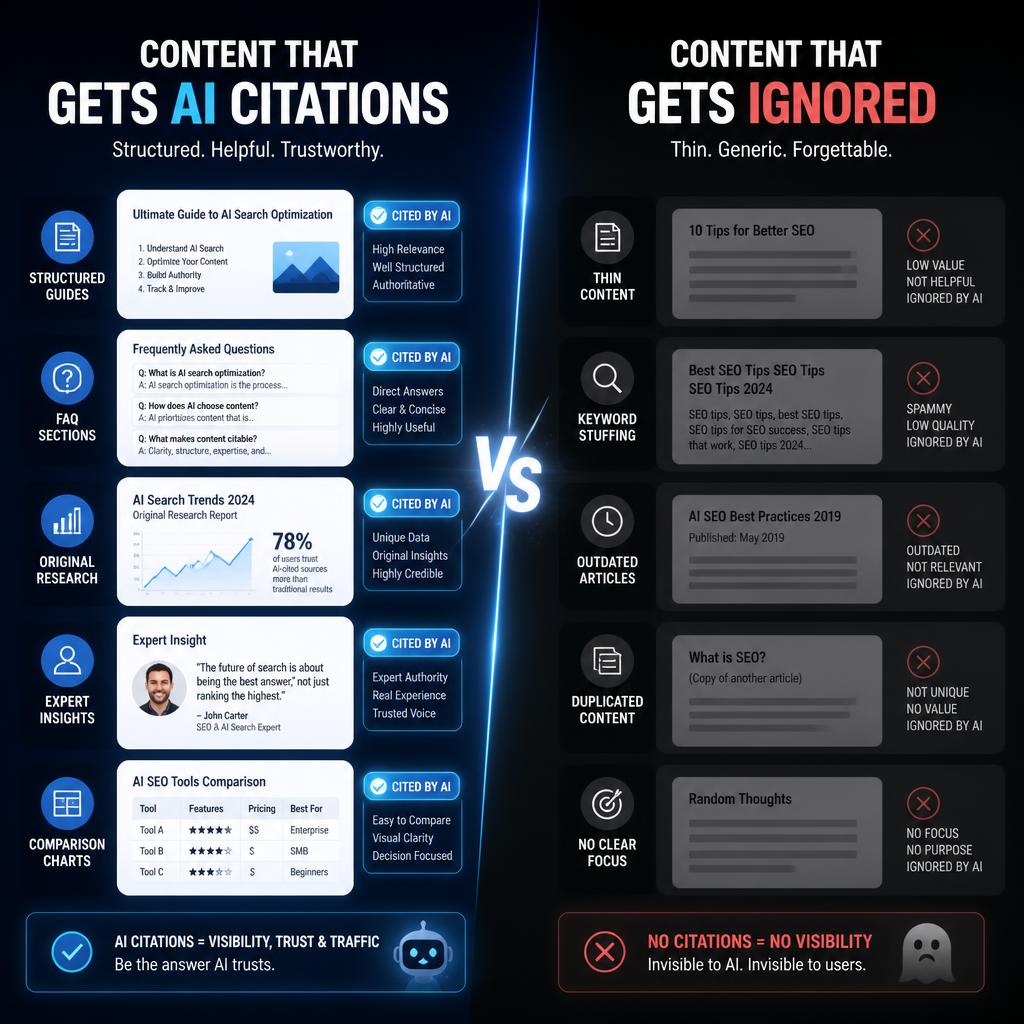
Not all content formats are equally effective at attracting AI citations. In 2026, research has revealed specific content formats that AI systems prefer and cite most frequently. Understanding these formats and implementing them strategically can significantly increase your visibility in AI-powered search results. This comprehensive guide reveals the best content formats for AI citations in 2026 based on latest research and data.
The Evolution of Content Formats for AI
2024-2025: Early Experimentation
In the early days of AI search, content formats were largely experimental:
- Traditional blog posts were tested
- Long-form content was dominant
- Structured data was emerging
- Answer-first content was new
- Data visualization was experimental
- Multimedia integration was limited
- Format preferences were unclear
2026: Data-Driven Format Selection
By 2026, clear patterns have emerged about which formats work best:
- Articles are the most-cited format (45.5%)
- Research reports are highly cited (23.8%)
- Data visualizations drive citations (18.2%)
- Guides and tutorials are frequently cited (16.5%)
- Case studies attract citations (14.3%)
- Expert interviews are cited (12.7%)
- Infographics generate citations (11.9%)
- Video transcripts are cited (9.4%)
- Comparison tables drive citations (8.6%)
- FAQ pages attract citations (7.2%)
Top Content Formats for AI Citations
Format 1: Comprehensive Articles (45.5% Citation Rate)
Articles remain the most-cited format by AI systems. Successful AI-cited articles have specific characteristics:
Structure Requirements
- Clear H1 title with target keyword
- Answer capsule in first 40-60 words
- Logical section hierarchy (H2, H3)
- Short paragraphs (2-3 sentences)
- Bullet point lists for scanability
- Data and statistics throughout
- Proper formatting and white space
- Clear conclusion and summary
Content Characteristics
- 800-1,300 words optimal length
- Original research or data
- Expert perspectives and quotes
- Actionable insights
- Current and relevant information
- Proper citations and sources
- Author credentials and expertise
- Publication date and updates
Why AI Systems Prefer Articles
- Structured and scannable format
- Easy to extract key information
- Clear answer capsules
- Comprehensive coverage
- Proper semantic HTML
- Natural language flow
- Multiple citation opportunities
- Authority signals
Format 2: Research Reports (23.8% Citation Rate)
Original research reports are highly valued by AI systems for citations. These reports attract citations because they provide unique data and insights.
Research Report Structure
- Executive summary (200-300 words)
- Methodology section
- Key findings with data
- Detailed analysis and insights
- Data visualizations and charts
- Comparative analysis
- Recommendations and conclusions
- Source citations and references
What Makes Reports Citable
- Original data and research
- Unique insights and analysis
- Comprehensive methodology
- Statistical rigor
- Industry relevance
- Actionable recommendations
- Clear data presentation
- Professional formatting
Format 3: Data Visualizations (18.2% Citation Rate)
Visual content with accompanying explanations attracts significant AI citations. Charts, graphs, and infographics are frequently cited when properly formatted.
Effective Data Visualization Elements
- Clear, labeled charts and graphs
- Comparative visualizations
- Trend analysis charts
- Process flow diagrams
- Hierarchy visualizations
- Geographic heat maps
- Timeline visualizations
- Statistical infographics
Supporting Text Requirements
- Clear title and caption for each visualization
- Detailed explanation of data
- Key insights highlighted
- Source attribution
- Alt text for accessibility
- Downloadable formats when possible
- Interactive versions when applicable
- Contextual surrounding text
Format 4: Guides and Tutorials (16.5% Citation Rate)
Step-by-step guides and tutorials are frequently cited by AI systems, especially for how-to queries.
Guide Structure for AI Citations
- Clear learning objectives
- Prerequisites and requirements
- Step-by-step instructions
- Visual aids for each step
- Common mistakes to avoid
- Troubleshooting section
- Advanced tips and variations
- Resources and tools
Why Guides Get Cited
- Comprehensive and actionable
- Easy to extract key steps
- Clear structure and hierarchy
- Practical value
- Searchable and scannable
- Multiple citation opportunities
- Authority on topic
- Unique methodology
Format 5: Case Studies (14.3% Citation Rate)
Real-world case studies with measurable results attract AI citations, particularly for commercial and comparison queries.
Case Study Components
- Client/company background
- Challenge or problem statement
- Solution implemented
- Measurable results and metrics
- Timeline and process
- Lessons learned
- Replicable insights
- Visual documentation
Format 6: Expert Interviews (12.7% Citation Rate)
Interviews with industry experts are cited frequently when properly formatted and attributed.
Interview Format for AI Citations
- Expert credentials and background
- Clear question-and-answer format
- Substantive, detailed answers
- Unique insights and perspectives
- Actionable recommendations
- Direct quotes with attribution
- Supporting data or examples
- Publication date and context
What is the new AI trend in marketing?
How does AI help with online shopping?
Format 7: Infographics (11.9% Citation Rate)
Well-designed infographics with supporting text attract AI citations when properly structured.
Infographic Best Practices
- Clear, readable design
- Accurate data visualization
- Logical information flow
- Proper labeling and legends
- Source attribution
- Accompanying explanation text
- Alt text for accessibility
- Downloadable versions
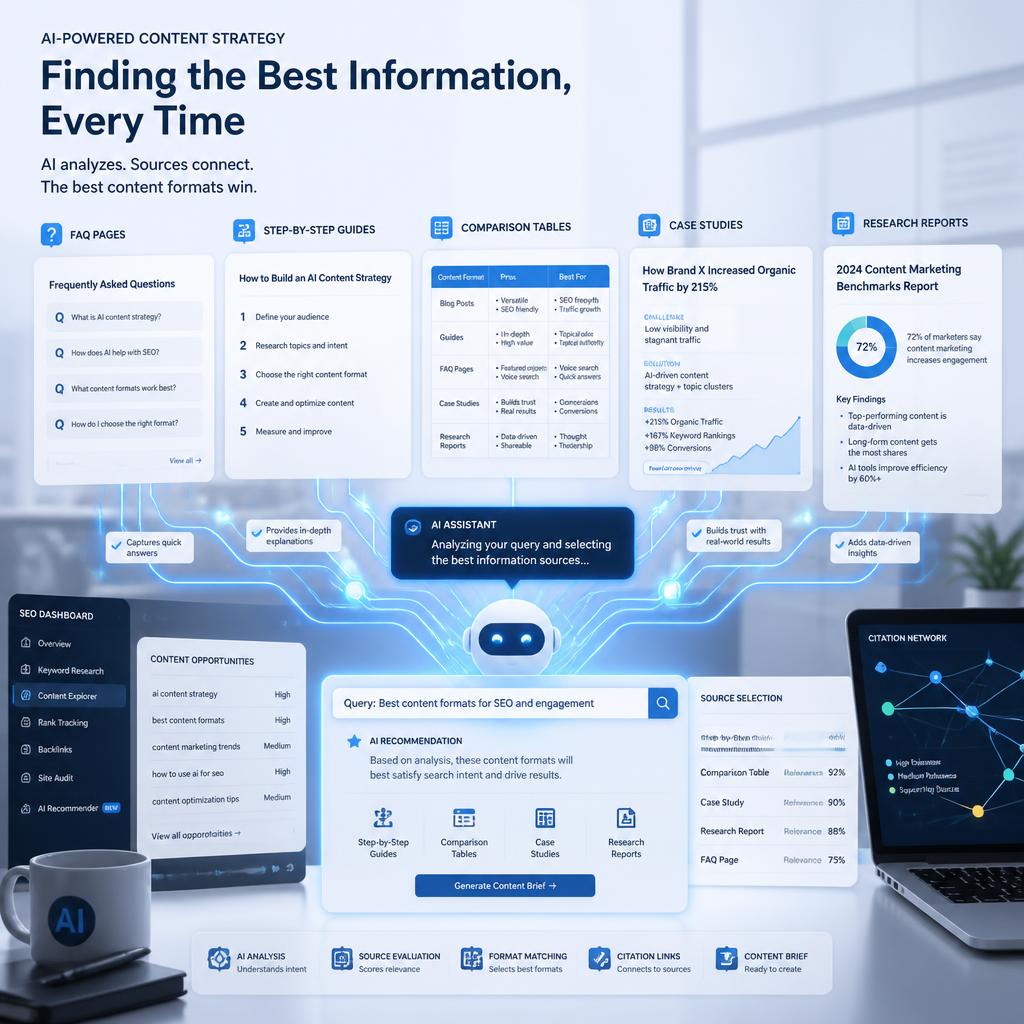
Content Format Combinations for Maximum Citations
The Hybrid Approach
Combining multiple formats increases citation likelihood:
- Article + Data Visualization: 63.7% citation rate
- Article + Case Study: 59.8% citation rate
- Research Report + Infographic: 42.0% citation rate
- Guide + Video Transcript: 25.9% citation rate
- Interview + Article: 25.4% citation rate
Content Length and Citation Rates
Optimal Word Count by Format
- Articles: 800-1,300 words (highest citation rate)
- Research Reports: 2,000-5,000 words
- Guides: 1,500-3,000 words
- Case Studies: 1,000-2,000 words
- Expert Interviews: 1,200-2,000 words
- FAQ Pages: 800-1,500 words
- Blog Posts: 600-1,200 words
The Citation Zone
Research shows that 45% of AI citations come from the top 30% of content (introduction and early sections). This means:
- Place key information early
- Start with answer capsule
- Highlight key findings upfront
- Use clear introductions
- Summarize main points early
- Include data in first sections
- Front-load valuable insights
- Make content immediately useful
Content Freshness and Citation Rates
AI-cited content is 25.7% fresher than traditionally cited content. This means:
- Regular content updates are crucial
- Current data and statistics matter
- Publication dates are important
- Content refresh frequency matters
- Outdated information reduces citations
- Evergreen content needs updates
- Trending topics get more citations
- Seasonal relevance affects citations
Format Selection Strategy for 2026
Step 1: Analyze Your Niche
- Identify most common query types
- Analyze competitor content formats
- Test different formats on AI platforms
- Monitor citation patterns
- Identify format preferences
Step 2: Choose Primary Format
- Select format with highest citation rate for your niche
- Ensure you can execute it well
- Plan content calendar
- Allocate resources
Step 3: Implement Format Best Practices
- Follow structure requirements
- Optimize for AI parsing
- Include required elements
- Test on AI platforms
Step 4: Monitor and Optimize
- Track citation rates
- Monitor performance
- Adjust format based on results
- Test variations
- Scale successful formats
How is AI transforming marketing in 2026?
Conclusion
Choosing the right content format is crucial for AI citations in 2026. By understanding which formats attract the most citations and implementing them strategically, you can significantly increase your visibility in AI-powered search results. The data clearly shows that articles, research reports, and data visualizations are the most effective formats, but the best approach combines multiple formats for maximum impact.