Measuring Link Building ROI in 2026: Advanced Metrics & Analytics
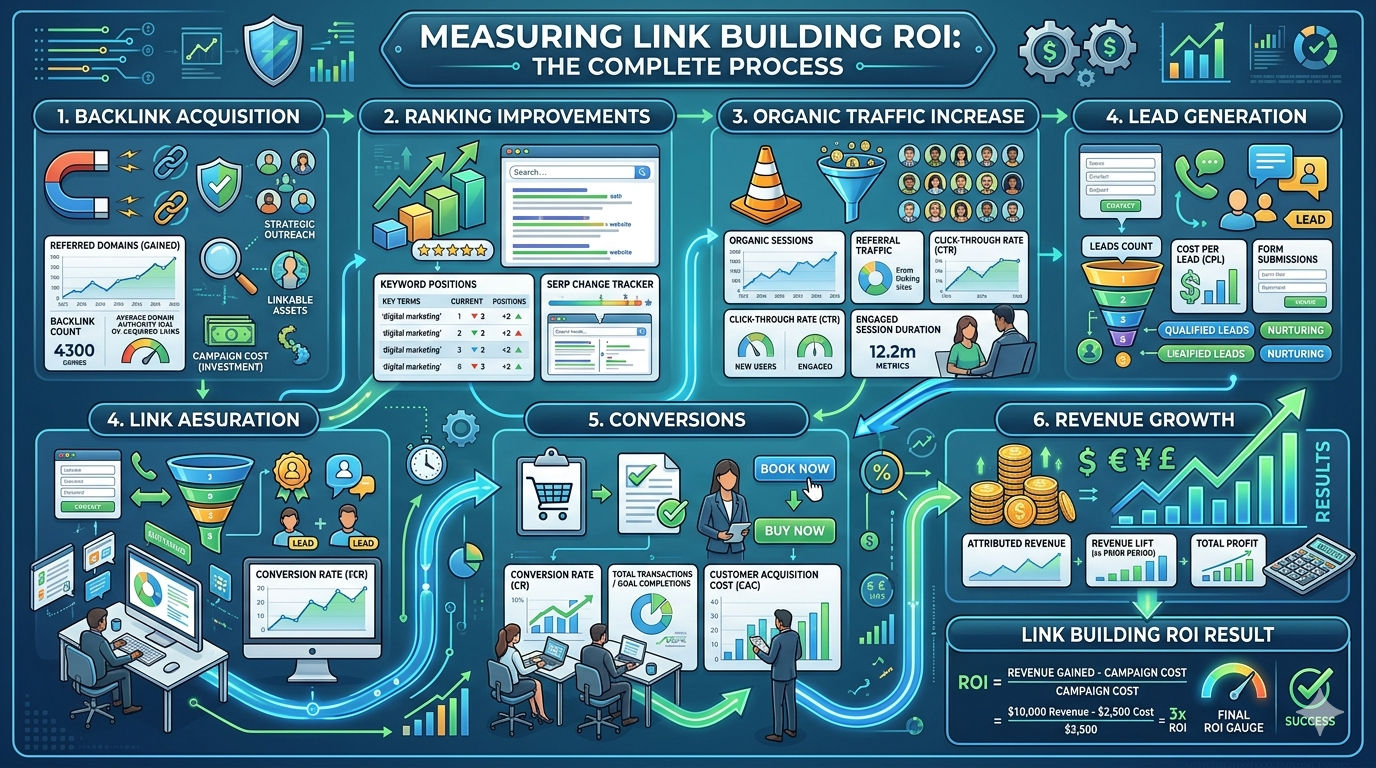
Link building remains one of the most effective SEO strategies in 2026, but businesses are no longer satisfied with vanity metrics such as Domain Rating, Domain Authority, or the number of backlinks acquired. Marketing teams, agencies, and business owners now want a clear answer to one question:
How much revenue does link building generate?
The ability to measure link building ROI accurately has become a competitive advantage. Companies that understand the financial impact of backlinks can allocate budgets more effectively, identify profitable campaigns, and scale successful strategies.
This guide explains how to measure link building ROI in 2026 using modern analytics platforms, revenue attribution models, and AI-powered forecasting tools.
What Is Link Building ROI?
Link Building ROI (Return on Investment) measures the financial return generated from backlink acquisition compared to the cost of obtaining those links.
The basic formula is:
ROI = (Revenue Generated – Cost of Link Building) ÷ Cost of Link Building × 100
For example:
- Total link-building cost: $5,000
- Revenue generated from organic search: $20,000
ROI = (20,000 – 5,000) ÷ 5,000 × 100
ROI = 300%
This means every dollar invested generated three dollars in profit.
AI Search Optimization Checklist 2026
Digital PR Strategy 2026: AI and Automation
Why Traditional Link Metrics No Longer Matter
For years, SEO professionals focused on metrics such as:
- Number of backlinks
- Domain Authority
- Domain Rating
- Referring domains
- Anchor text distribution
While these metrics remain useful indicators, they do not directly measure business performance.
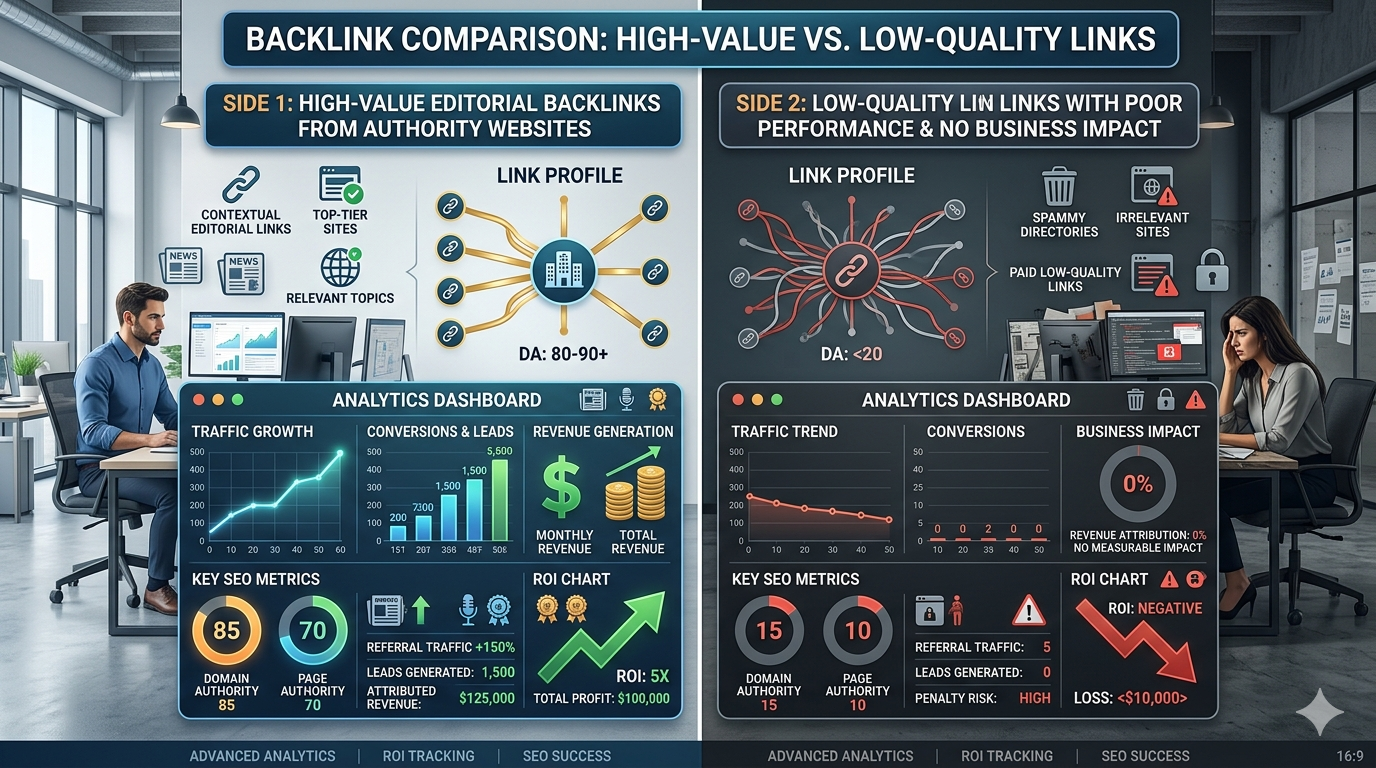
A backlink from a DR 90 website is not automatically valuable if it produces no traffic, no conversions, and no revenue.
In 2026, successful SEO teams evaluate backlinks based on business outcomes rather than SEO metrics alone.
The New Link Building KPIs for 2026
Revenue Per Link
Revenue Per Link is one of the most useful metrics available today.
Formula:
Revenue Per Link = Total Revenue Generated ÷ Number of Links Acquired
Example:
- 40 backlinks acquired
- $32,000 generated revenue
Revenue Per Link = $800
This metric helps identify which campaigns create the highest financial return.
Cost Per Qualified Link
Not every backlink deserves equal value.
Qualified links typically:
- Generate traffic
- Improve rankings
- Come from relevant websites
- Remain active long term
Formula:
Cost Per Qualified Link = Total Campaign Cost ÷ Number of Qualified Links
The lower this number becomes, the more efficient your campaign is.
Organic Revenue Growth
Track changes in:
- Organic conversions
- Ecommerce revenue
- Lead generation value
- Subscription revenue
Many organizations now connect SEO performance directly with CRM systems to measure actual customer value.
Tracking Link Building ROI with Google Analytics 4
Google Analytics 4 provides powerful attribution capabilities.
Key metrics to monitor:
Organic Sessions
Measure traffic growth after backlink acquisition.
Track:
- New users
- Returning users
- Engagement rate
- Session duration
Conversion Events
Set up conversion tracking for:
- Purchases
- Form submissions
- Trial signups
- Phone calls
- Newsletter subscriptions
Revenue Attribution
GA4 allows marketers to identify which acquisition channels contribute to revenue.
This provides a clearer understanding of how SEO and backlinks influence customer journeys.
Using Ahrefs to Measure Link Impact
Ahrefs remains one of the most valuable tools for link analysis.
Useful reports include:
Referring Domains Growth
Monitor:
- New backlinks
- Lost backlinks
- Link velocity
- Link quality
Organic Traffic Trends
Compare:
- Traffic before campaign
- Traffic after campaign
- Ranking improvements
Top Pages Report
Identify pages receiving:
- Most backlinks
- Highest traffic growth
- Strongest conversion performance
These pages often deliver the highest ROI.
Using Semrush for ROI Analysis
Semrush offers advanced reporting capabilities.
Track:
- Keyword visibility
- Competitor backlink growth
- Market share changes
- Organic traffic value
Organic Traffic Value estimates how much traffic would cost through paid advertising.
This provides an additional way to quantify backlink value.
Multi-Touch Attribution Models
One challenge with SEO measurement is attribution.
Customers rarely convert after a single visit.
Modern attribution models include:
First-Touch Attribution
Credits the first interaction.
Useful for measuring awareness.
Last-Touch Attribution
Credits the final interaction before conversion.
Useful for short sales cycles.
Linear Attribution
Distributes credit across every touchpoint.
Useful for longer buying journeys.
Data-Driven Attribution
AI assigns conversion value based on historical performance patterns.
This is becoming the preferred approach in 2026.
Measuring Revenue Per Backlink
Suppose:
- Link Building Cost: $10,000
- Links Acquired: 50
- Additional Organic Revenue: $75,000
Revenue Per Link:
$75,000 ÷ 50 = $1,500
ROI:
($75,000 – $10,000) ÷ $10,000 × 100
ROI = 650%
These calculations help justify larger SEO budgets.
Predictive Link Value Analysis
AI-powered SEO platforms now estimate future backlink value.
Factors analyzed include:
- Website authority
- Content relevance
- Historical traffic trends
- Link placement
- User engagement
- Industry competitiveness
Instead of evaluating links only after acquisition, businesses can estimate future returns before investing resources.
Best Content Formats for AI Citations in 2026
What is the new AI trend in marketing?
Competitive ROI Analysis
Competitive intelligence is a critical component of modern SEO.
Questions to ask:
- Which competitors acquire the most links?
- What content attracts backlinks?
- Which domains link to competitors but not to you?
- How much organic traffic advantage do competitors possess?
Competitive gap analysis reveals growth opportunities and helps prioritize outreach efforts.
Building a Link Building ROI Dashboard
A modern dashboard should include:
Financial Metrics
- Revenue generated
- ROI percentage
- Cost per link
- Cost per acquisition
SEO Metrics
- Referring domains
- Organic traffic
- Keyword rankings
- Visibility score
Business Metrics
- Leads generated
- Conversion rate
- Customer acquisition cost
- Customer lifetime value
Combining these metrics provides a complete picture of performance.
Link Lifetime Value (LLV)
One overlooked metric is Link Lifetime Value.
Many backlinks continue generating traffic and authority for years.
Formula:
LLV = Total Revenue Generated Over Link Lifespan
Example:
Year 1 Revenue: $500
Year 2 Revenue: $400
Year 3 Revenue: $300
Lifetime Value = $1,200
A backlink worth $1,200 over three years may justify a higher acquisition cost.
Common Link Building ROI Mistakes
Focusing Only on Domain Authority
Authority metrics alone do not guarantee revenue.
Ignoring Conversion Tracking
Traffic without conversions creates misleading conclusions.
Measuring Too Early
SEO often requires several months before producing measurable results.
Overlooking Customer Lifetime Value
Many customers generate recurring revenue over multiple years.
ROI Benchmarks for 2026
Typical industry benchmarks include:
- Average ROI: 200%–400%
- Strong campaigns: 500%+
- Exceptional campaigns: 1000%+
- Payback period: 3–12 months
- Average backlink lifespan: 3–5 years
Actual performance varies by industry, competition, and business model.
Future Trends in Link Building ROI
The future of ROI measurement includes:
- AI forecasting models
- Automated attribution systems
- Real-time SEO dashboards
- Predictive ranking simulations
- Revenue forecasting
- Competitive advantage scoring
As search engines evolve, marketers who connect SEO directly to revenue will outperform those focused solely on rankings.
Final Thoughts
Link building ROI in 2026 is no longer measured by backlink counts or authority scores alone. Businesses now evaluate backlinks through revenue, conversions, customer lifetime value, and competitive impact.
The most successful SEO teams combine Google Analytics 4, Ahrefs, Semrush, CRM data, and AI-powered forecasting tools to understand the true value of every backlink they acquire.
When measured correctly, link building remains one of the highest-return marketing investments available, capable of generating long-term traffic, sustainable rankings, and significant business growth.